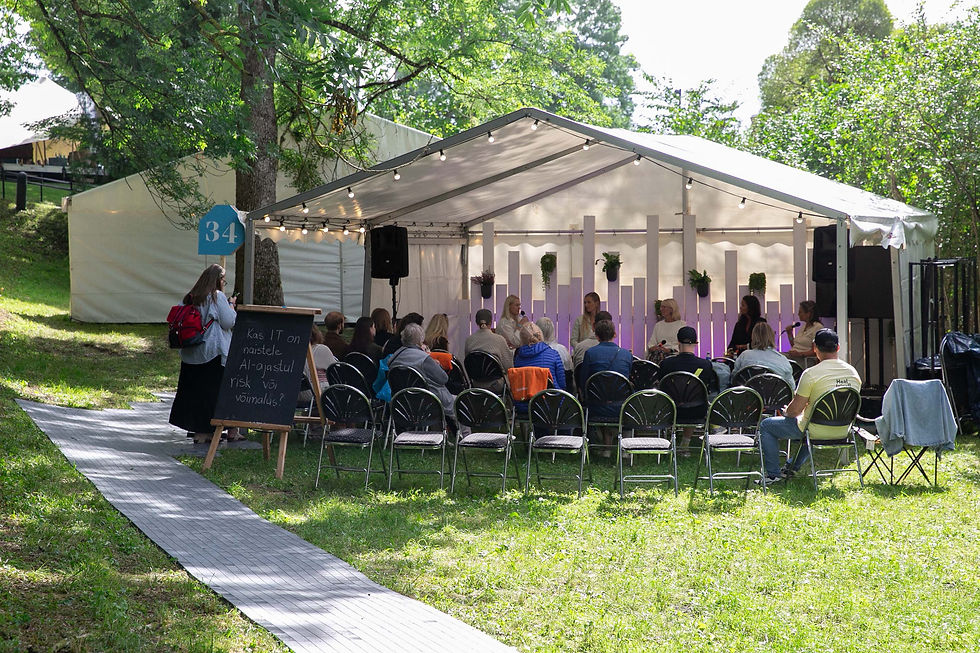
Annelinn residents share their views on climate change and public space.
Annelinn residents share their views on climate change and public space. 🌿
The Institute of Baltic Studies, together with the City of Tartu, conducted a survey among residents living in the apartment buildings between Kaunase and Kalda streets in Annelinn to better understand how people experience outdoor space, cope with changing climate conditions, and what improvements they would like to see in their neighbourhood.
The study is part of the #ClimaGen project, which aims to improve the greenery, climate resilience, and functionality of public spaces in the project area in Annelinn.
A total of 156 residents from 14 apartment buildings participated in the survey, representing approximately one in five households in the target area. The strong participation demonstrates that residents care about their living environment and want to contribute to its future development.

Residents enjoy living in Annelinn, but see room for improvement
The results show that people generally enjoy living in Annelinn, but many feel that the district is not yet well adapted to climate change and contemporary needs.
When assessing their neighbourhood, residents highlighted a lack of shaded areas and limited leisure opportunities among the main shortcomings. Many respondents expressed a desire for more greenery, particularly tall vegetation and trees that can provide shade for buildings, public spaces, and walking routes.
Residents would also like to see more comfortable seating areas with shelter from both rain and heat, as well as multifunctional spaces where people of different ages can spend time together.
Climate change is already affecting daily life
One of the most pressing concerns identified by residents is the increasing impact of summer heatwaves.
Nearly half of respondents reported purchasing cooling or ventilation devices to reduce indoor temperatures, while 43% have made changes to their homes, such as installing curtains or other shading solutions. More than half have also noticed the effects of extreme weather conditions in their electricity and heating costs.
The findings highlight the importance of nature-based solutions and climate adaptation measures that can help reduce overheating and improve comfort during extreme weather events.
Residents are willing to contribute
The survey also revealed a strong willingness among residents to contribute to improving their neighbourhood.
Forty percent of respondents said they would like to participate in planting activities, while one-third would be interested in taking part in community clean-up initiatives. However, the main barriers to participation are practical rather than motivational, with lack of time and lack of information identified as the most common obstacles.
These results suggest that there is significant potential for community involvement when residents are provided with clear opportunities and information on how to participate.
Young people share similar concerns
As part of the study, young people from Annelinn secondary schools were also surveyed.
Overall, their responses were similar to those of adult residents. Young people also reported experiencing the effects of summer heat and expressed concerns about flooding following heavy rainfall. They placed a particularly high value on greenery and biodiversity and frequently mentioned the need for attractive places to spend their free time.
At the same time, young respondents were more critical of the quality of public spaces and expressed a strong interest in seeing improvements to the neighbourhood environment.
🔗 Download the survey results two-pager:
For more information read the Tartu City Government Press Release.
🔗 Learn more about ClimaGen in Tartu:
implemented by the City of Tartu, the Institute of Baltic Studies and TalTech.