Young innovators shape sustainable solutions in Tartu: Highlights from the Annelinn Green Hackathon
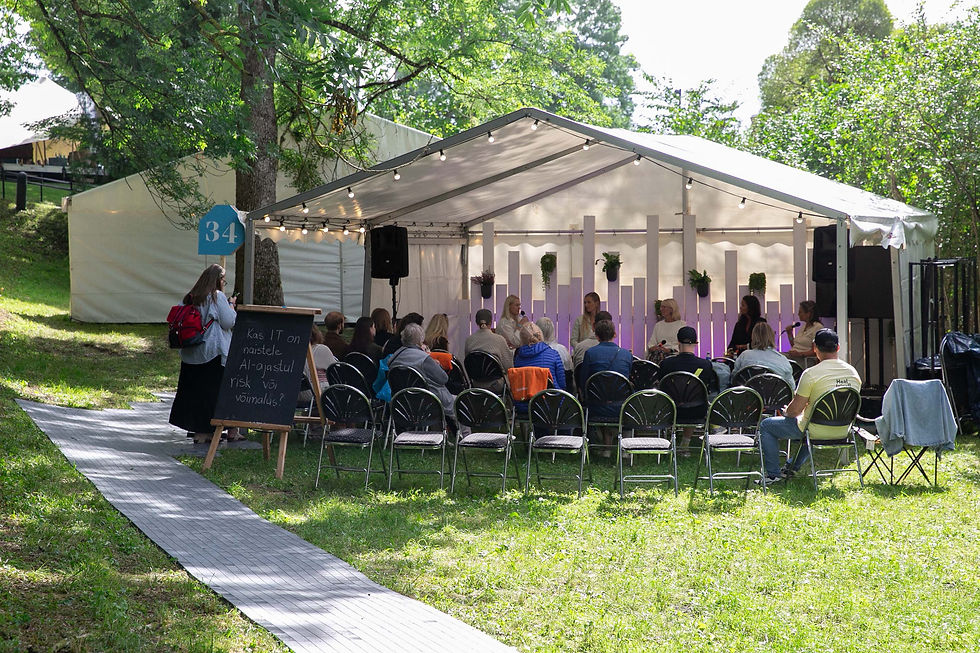
In April 2026, the Annelinn Green Hackathon came to a close with a final event celebrating innovative, community-driven solutions for a more sustainable neighbourhood in Tartu.
Organised in collaboration between the City of Tartu, the Institute of Baltic Studies, TalTech, and Junior Achievement Estonia, the hackathon was part of the ClimaGen project and invited young people aged 16 to 30 to develop environmentally friendly ideas addressing local challenges in the Annelinn district.
From ideas to impact
Over the course of three months, 22 participants formed eight teams and worked intensively to develop their concepts. The programme combined training sessions, independent work, and mentoring, supporting participants in shaping their ideas into concrete and impactful solutions.
A winning idea rooted in community
The winning team, Tatrapadi (Buckwheat Pillow), presented a circular and community-based product with both environmental and social benefits. Their concept centres on producing customizable buckwheat pillows using second-hand fabric collected from local residents, while the sewing process provides employment opportunities for seamstresses from the Annelinn community. The team plans to further develop the idea by establishing a company and scaling production.
Diverse solutions for a sustainable future
The hackathon also highlighted a range of other innovative ideas. Second and third place were awarded to teams working on:
a methodology to assess the benefits of nature-based solutions;
a renovation calculator designed to simplify cost estimation while integrating CO₂ savings.
Together, these ideas reflect the potential of combining local knowledge, creativity, and sustainability-focused thinking.
The Annelinn Green Hackathon demonstrates how ClimaGen supports local engagement and innovation by creating opportunities for young people to actively contribute to climate-resilient urban development. By connecting community members, experts, and institutions, initiatives like this help translate climate ambitions into tangible, locally grounded solutions.
* Images by: Erge Jõgela